
When you’re running a personal site, blog, or portfolio, you don’t need enterprise-grade infrastructure. GitHub Pages plus a custom domain gets you free static hosting, free HTTPS, and a git-based publishing workflow — no servers to patch, no bills to watch.
This post walks through why static hosting is the right call for most personal sites, and when you’d actually reach for something like AWS or Cloudflare Workers instead.
The architecture at a glance
Here’s a simple diagram showing how a request flows from a visitor’s browser to your GitHub Pages site once DNS and HTTPS are configured correctly.
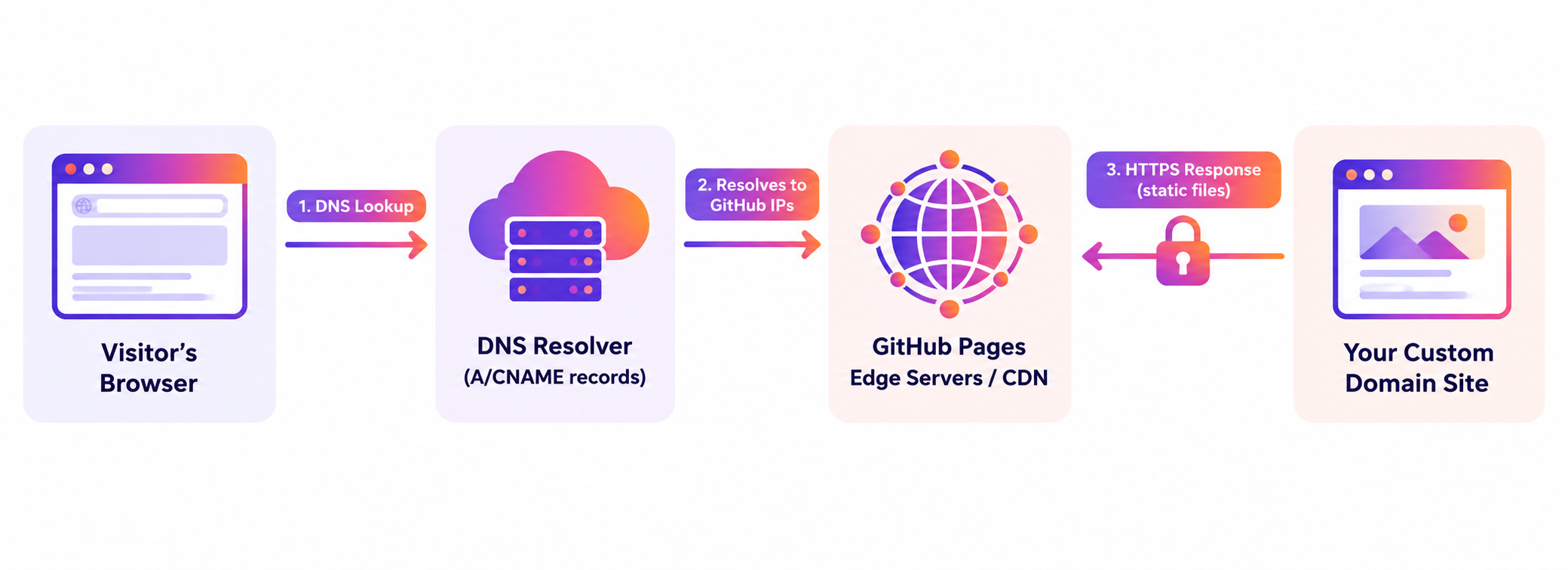 Figure 1: DNS resolves your domain to GitHub’s edge servers, which serve the pre-built static files over HTTPS.
Compare that to a typical AWS setup, which usually involves Route 53, CloudFront, an S3 bucket, and an ACM certificate — more moving parts, and a small ongoing cost even at low traffic.
The tradeoff
Static hosting trades flexibility for simplicity. You give up dynamic server-side rendering, but you gain zero maintenance, zero cost, and a deploy pipeline that’s just
git push.
For most personal sites and blogs, that tradeoff is a clear win. You’re not running a login system or a database — you’re publishing content.
When to reconsider
There are a few signals that mean it’s time to move beyond static hosting:
- You need server-side logic (auth, payments, dynamic APIs)
- You’re storing and querying real user data
- Traffic and compute needs grow past what a CDN in front of static files can handle
Until then, this setup gets you a fast, secure, zero-cost site.